The Supreme Court’s Order on AIFF Constitution: Through a Layman’s Eyes
The Supreme Court’s recent order approving the new Constitution of the All India Football Federation (AIFF) is a powerful, deeply thoughtful document that reimagines sports administration through a lens of public interest, inclusivity, professionalism, and institutional accountability. Far more than a technical verdict, it sets a pro-people, forward-looking template with profound implications—not only for Indian football but for the governance of sport in India as a whole. I tried to look at it through a layman’s eyes and as someone who has been following Indian football for a long time. There is no question that it is a very progressive verdict. Does it curtail the All India Football Federation’s rights to monetize the sport? Maybe. Will it earn the FIFA wrath because of certain clauses in it? Maybe. But at the end of the day, if you read through the order, it sets clear standards for AIFF to function with utmost transparency and accountability. As fans of Indian football, we should appreciate the court for the standards it has set and, in the process, put various stakeholders like the state FAs who were “vehemently” against various measures of accountability the new constitution has proposed.

Setting a Vision for Indian Football and Sport

The judgment opens with a sweeping historical reflection, charting football’s journey in India and invoking powerful constitutional values. Referencing leading sociological and legal works, the Court recognizes sporting facilities and opportunities as “material resources of the community” and describes organizing bodies as “institutions of the national life.” By framing sporting spaces as “places of public resort,” the order affirms their role in social progress and collective well-being.

The Court underlines a vital constitutional duty: to ensure that sporting opportunities are “accessible, not just for pursuing sport, but also for its administration.” It calls upon the State for a deeper Sadhana—a continued, determined endeavor—to cultivate sport with “efficiency, integrity, professionalism, and expertise.” In pointed language, the judgment insists on democratizing access to both athletic and administrative opportunities, emphasizing that facilities and revenues must not be cornered by the urban economic elite, but rather “be distributed to subserve and encourage accessible and affordable sport in our country.”

A Candid Appraisal of Past Failures and Grassroots Activism

The order does not shy away from critiquing past governance. The Court bluntly observes that the AIFF “failed to evolve with time,” delayed its global affiliations by over a decade, and allowed the sport to fracture along political and regional lines, thereby alienating key stakeholders such as players. This honest reckoning honors individuals like Rahul Mehra, whose tenacious litigation efforts helped catalyze reform and details the years-long journey that brought about this historic shift—including the vital contributions of Justice L. Nageswara Rao, whose BCCI reform experience deeply informed the drafting process.

A Forum of Inclusive Stakeholders: Redefining the General Body

One of the order’s greatest strengths is its insistence on inclusive governance. The draft Constitution provides for a General Body that includes:

  • 1 representative from every state Member Association,
  • 15 elected “Eminent Players” (with a minimum of 5 women),
  • 3 club representatives (from ISL, I-League, and the Indian Women’s League),
  • Referee and coach representatives of both genders.

Despite opposition from both the AIFF and state associations, the Court finds inspiration in recent FIFA statutes that encourage broad-based stakeholder involvement. It firmly asserts that including players, coaches, referees, and clubs can only “herald transparency and fair play.” This approach aligns the AIFF with best global practices, where federations open their doors to diverse voices crucial for modern, ethical sports governance.

Transparency, Merit, and Women’s Representation in Recognition

The judgment exposes a surprising gap in AIFF’s recordkeeping: a near-total absence of historical data on national team players. The court decries this as a symptom of past mismanagement—a compelling reminder of why professionalization and transparency are urgently needed. As for the Executive Committee, the order backs a sizeable inclusion of eminent players, with a gender quota to ensure meaningful women’s participation. The number of Vice Presidents is set at three, again with gender representation, to prevent politicized regional gatekeeping.

Aligning the Pyramid: Constitutional Application to State Associations

Unlike the popular narrative that the Supreme Court heavily relied on earlier verdicts on BCCI to form this constitution, it has to be highlighted that SC showed incredible nous in making the following remark: “However, the present case of Indian Football, which benefits immensely from a pyramidical structure, is placed on a different footing than the game of cricket.” Recognizing that reform at the top means little unless echoed below, the order mandates that state football associations bring their constitutions into line with the AIFF’s every two years. This safeguards against exploitation of loopholes (like “cooling-off” circumventions or shadow appointments) and upholds the pyramidical integrity of Indian football—from the grassroots to the national team.

Guarding AIFF’s Autonomy: Limits on Private Delegation

The most interesting part of the judgment is about the commercial exploitation of its rights through third-party entities. A Guardian article from 2012 notes the following regarding corruption in football: “National football associations, federations, and confederations own the broadcast and marketing rights to the national teams that everyone likes to follow. The elected officials in these organizations are supposed to use the revenues they generate to support the development of the game – but many seem to want to enrich themselves instead. Here’s how it works: accepting bribes is against the rules of all these organizations, so they cannot take the payment directly. Instead, they arrange for the federation to sell its rights to a marketing company, which in turn sells the rights to broadcasters, sponsors, and so on. In doing so they pass on a share of what they make to the federation officials.”

This puts the deal which AIFF entered in to with FSDL, a subsidiary of Reliance Industries under a shadow of doubt.  The tender document nor the agreement was available publicly until someone leaked the MRA contract pages online. With this judgment, what the court has emphasized is that such deals with third parties should follow due process and AIFF should not absolve its rights while engaging in such deals. The court noted that in the existing MRA, FSDL was allowed to set up the senior-most league of football in India and decide on its own wisdom the “format, rules, and structure of the league and the teams and players which will compete in it.” In this view, FSDL had virtually acquired the right to commercialize each and every aspect of the new league which should not be permitted.

The Court is unequivocal: while AIFF can work with commercial entities for the monetization and promotion of the sport, its essential governing responsibilities are non-delegable. The days when a private party could control the senior-most league’s rules, entry, or format—essentially becoming the shadow federation—are over. The judgment fortifies the primacy of AIFF by upholding strong definitions of “essential aspects,” and blocks future attempts to privatize the sport’s regulatory structure. Commercial interests must be balanced by the protection of public goods and sporting values. While this could be termed very conservative in its nature, it is very important that the sport retains its inclusivity and should not be at the behest of the whims and fancies of a third-party private entity which was the case in the last decade for Indian football and this will be attested to by a lot of stakeholders in the Indian football ecosystem.

Ensuring Positive Competitive Structure: Promotion, Relegation, and Governance Shields

The Supreme Court offers an emphatic endorsement of open competition as the lifeblood of Indian football. Defining the top division league as one “owned, operated, and recognized” by AIFF and governed by promotion and relegation, the order outlaws any return to “closed league” structures or regulatory gerrymandering. Attempts to dilute this principle, whether by invocation of inapplicable foreign precedents or by commercial privilege, are firmly rejected as the court invoked the 2019 decision taken jointly by AFC, AIFF, and FSDL wherein relegation and promotion in the topmost league was agreed upon by the 2024-25 season. The court went on to note that “Taking into account the fact that Indian football began way back in time and also the fact that Indian sports have flourished with time, it is an opportune moment to decide that hereon, Indian football will not be played in silos.”

Amendments and Safeguards: The Role of the Court

Perhaps most notably, the Court introduces a “safety valve” to prevent future dilution of these hard-won reforms. No amendment to the AIFF Constitution can be enacted without a 75% majority and the leave of the Supreme Court. Yet, the Court clarifies that ongoing micromanagement is not its role; its present intervention is a finite, but essential, safeguard to ensure the proper foundational norms are respected as Indian football enters a new era.

A Vision for the Future: Building a Thriving Sporting Nation

The order closes with a message of hope, vision, and collective responsibility, affirming the enormous potential of India’s sporting talent and the need to channel it with “organizational support… from village fields to international platforms.” By laying down a bold, transparent, and equitable constitutional architecture for Indian football, the Supreme Court’s order gives reason to believe that the mistakes of the past can yield to a future of greater integrity, vibrancy, and competitiveness.

Conclusion

This judgment is, indeed, a monumental charter for sporting democracy in India. It recognizes the deep sociological significance of football, upholds the cause of transparency, merit, and gender equity, and places the governance of the game back with those to whom it truly belongs—the community of players, coaches, referees, and fans. The current narrative of this constitution being overly dependent on former verdicts on BCCI lacks merit. Well, the order does point to earlier rulings on BCCI at various junctures, but it is very mindful that it is dealing with football, and it has to be treated differently. There are instances where this is laid bare in the order too. The reading that this order places undue importance on BCCI is very frivolous and platonic in nature. The order provides a constitutional framework not just for AIFF, but as a model for public-spirited, constitutionally sound sports governance nationwide. In restoring faith and vision to the landscape of Indian football, the Supreme Court has underlined its role not only as an arbiter of law but as a champion of good governance and the public good. The questions of whether this order and the draft constitution will survive a FIFA ban or will it restrict the All India Football Federation’s capability of monetizing the game stand. What we can be assured of is that the Supreme Court has laid bare a system with proper checks and accountability with this order and this is something that should reassure us as fans.
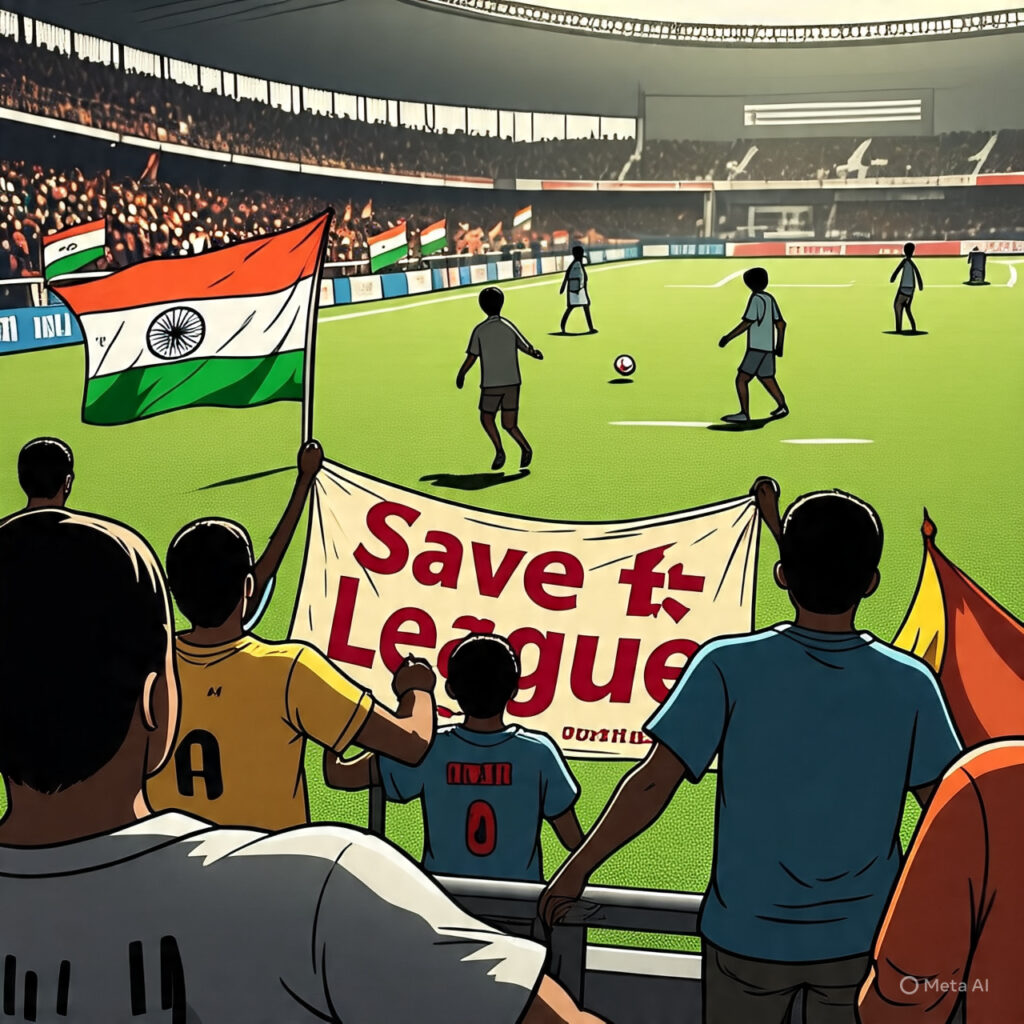
The Systemic Annihilation of the I-League: How Mismanagement is Destroying Indian Football’s Second Division

The 2024–25 I-League season should have been a celebration of progress for Indian football. Instead, it has spiraled into a case study of dysfunction—marred by legal disputes, inconsistent rulings, and shattered credibility. Once regarded as the backbone of Indian football’s development pathway, the I-League now finds itself stuck in a quagmire of mismanagement and administrative neglect.

Namdhari FC and the Cledson Silva Ineligibility Dispute

Yet another blow came when Namdhari FC fielded an ineligible player, Cledson C. Silva, in a match against Inter Kashi.

  • The AIFF Disciplinary Committee awarded Inter Kashi a 3–0 win by forfeit.
  • The AIFF Appeals Committee reversed the decision, citing procedural errors.
  • Like the Barco case, this issue is now escalated to the Court of Arbitration for Sport (CAS).

Due to these unresolved legal entanglements, the AIFF is unable to declare an official I-League champion or even hold a medal ceremony. As of June 2025—two months after the last match on April 6—there is still no winner. This marks an unprecedented collapse in Indian football’s administrative history.

Inter Kashi and the Mario Barco Controversy: A Legal Quagmire

The most high-profile controversy of the season involves Inter Kashi’s Spanish forward, Mario Barco Vilar. Initially registered and then replaced due to injury, Barco was curiously re-registered mid-season, flouting existing AIFF regulations.

  • The AIFF League Committee approved his return.
  • The AIFF Appeals Committee later declared the move invalid.
  • Consequences: Inter Kashi were docked four points, and Churchill Brothers were named provisional champions.

Despite the decision, the championship remains undecided, as the dispute awaits resolution at CAS—months after the league concluded.

Disciplinary Disarray and Governance Failure

The season has exposed deep flaws in AIFF’s judicial bodies. The Disciplinary and Appeals Committees have delivered erratic, conflicting verdicts, shaking the league’s structural integrity. The fate of Delhi FC and Sporting Club Bengaluru—both facing potential relegation—remains in limbo. These inconsistencies have paralyzed the league and demonstrated a serious lack of professionalism and accountability in football governance.

The Bigger Picture: Institutional Rot and AIFF’s Leadership Crisis

The I-League chaos is not an isolated incident—it reflects deeper systemic issues within Indian football:

  • The AIFF constitution is still under review by the Supreme Court.
  • The media rights deal with FSDL/Reliance is nearing expiry, with no public roadmap.
  • AIFF President Kalyan Chaubey faces intensifying criticism, with fans tracking his unfulfilled promises—ranging from youth development to better infrastructure.

Platforms like Reddit and X (formerly Twitter) are now home to fan-led investigations, accountability threads, and growing public disillusionment with the AIFF regime.

Why the I-League Still Matters—and Why Its Survival is Critical

Despite the chaos, the I-League remains an essential pillar of Indian football:

  • It offers a lower-cost investment option for clubs compared to the Indian Super League (ISL).
  • It provides a pathway to ISL promotion, which, if properly managed, could incentivize serious investments.
  • It serves as a platform for emerging Indian players, coaches, and smaller clubs to gain national visibility.

But without immediate reforms and structural clarity, these benefits risk being permanently lost. Mismanagement—not competition—is what threatens the I-League’s future.

Conclusion: Rebuild or Relegate to Irrelevance

The I-League is not merely in crisis—it is being systematically dismantled. The 2024–25 season has laid bare the incompetence, opacity, and dysfunction at the heart of Indian football administration.

Unless the AIFF takes swift and transparent action, the I-League will continue its descent—not because of failure on the pitch, but because of deliberate negligence off it.

Double Promotion for Technico Football Foundation as They Establish Themselves in Bengaluru’s Football Scene

Bengaluru, [30-01-2025] – Technico Football Foundation (TFF), part of Technico Sports India Pvt Ltd and Technico Excellence Foundation, continues to make waves in Karnataka football with back-to-back promotions across multiple divisions. The club’s Men’s Senior Team clinched the 2024-25 BDFA B-Division League title with an unbeaten record, earning the nickname “The Invincibles”, and securing promotion to the A-Division League. Meanwhile, their Elite Junior Boys Team finished as runners-up in the KSFA D-Division League, gaining promotion to the C-Division.

This achievement follows an already remarkable 2023-24 campaign, where TFF’s Senior Boys Team won the KSFA C-Division League, earning promotion to the B-Division, while the Elite Junior Boys were runners-up in the KSFA D-Division. With this latest success, TFF has accomplished an extraordinary feat – securing two league titles and two consecutive promotions for the Men’s Senior Team in two years.

The TFF Way – A System Built for Success

Technico Football Foundation operates a year-round training system at South United and Depot 18, with four registered teams across the KSFA and BDFA leagues:

  • Men’s Senior Team (A-Division)
  • Elite Junior Boys Team (C-Division)
  • Girls Senior Team (A-Division)
  • Elite Junior Girls Team (B-Division)

Led by Technical Director Vivek Menzel, the coaching staff includes experienced professionals such as AIFF A-License holder Amit Jaiswal (Senior Team Head Coach) and AIFF B-License holder Abhishek Malik (Junior Team Head Coach).

TFF attributes its success to its data-driven training philosophy, #TheTFFWay, which emphasizes analytics and performance tracking through partnerships with Step Out and Footrax. The team recorded an average of 267 successful passes per game this season—the highest in the league—showcasing their commitment to technical excellence.

Expanding for the Future

Building on this momentum, TFF is expanding its grassroots development program with the introduction of U17 and U15 teams in 2025, laying the foundation for a robust youth pipeline.

With a strong culture of Integrity, Equality, and Excellence, Technico Football Foundation is rapidly shaping the footballing landscape in Bengaluru and beyond.

Jamshedpur FC kick starts registration for youth team (U15) Trials for the Tata Football Academy (TFA)

Jamshedpur, October 17:

•     4-year full residential scholarship

•     The trials are open to boys born between 1st January 2011 and 31st December 2012

•     The players will be representing the Jamshedpur FC Youth teams and will also have a chance to represent Jharkhand as well as the Indian National teams across various age categories.

Jamshedpur Football Club has announced trials for its U15 (TFA) team. The online registration is open starting today and will close on 31st October 2024, 11:59 PM. 

Established in 1987, the prestigious Tata Football Academy (TFA) has played a pivotal role in identifying and nurturing some of India’s top footballing talent. Till date, 303 cadets have graduated from the academy, with 149 players (49%) progressing to represent both top professional football clubs and the Indian National Football team. Among the notable alumni are Pronay Halder, Udanta Singh, Subrata Paul, Noel Wilson, Robin Singh, Narayan Das, Carlton Chapman, Renedy Singh, and Mahesh Gawli, all of whom have made significant contributions to Indian football at various levels. A total of 24 cadets have captained the Indian National football team across various age group tournaments. 

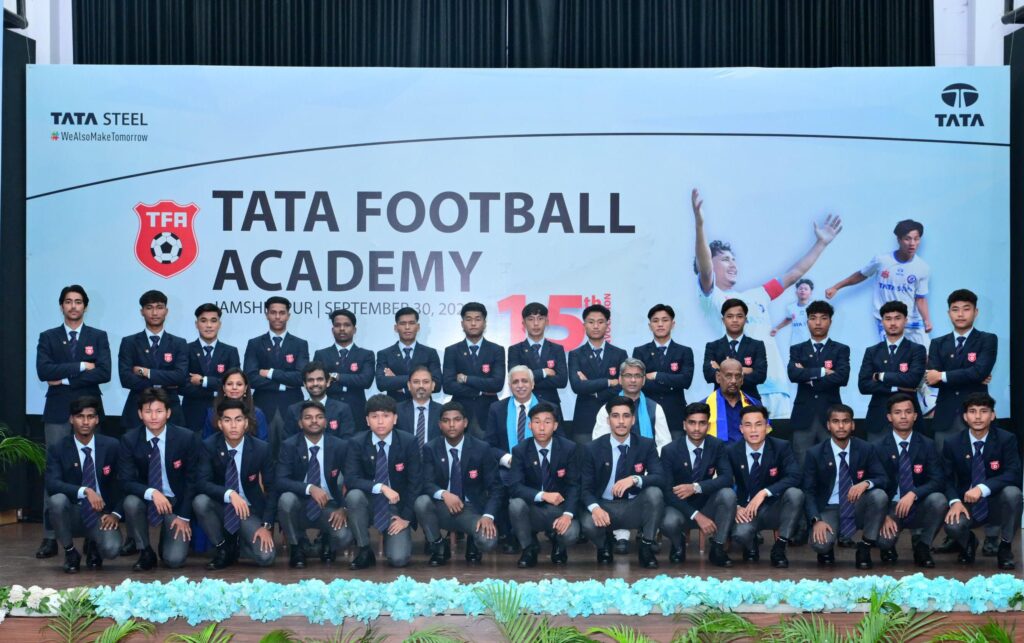
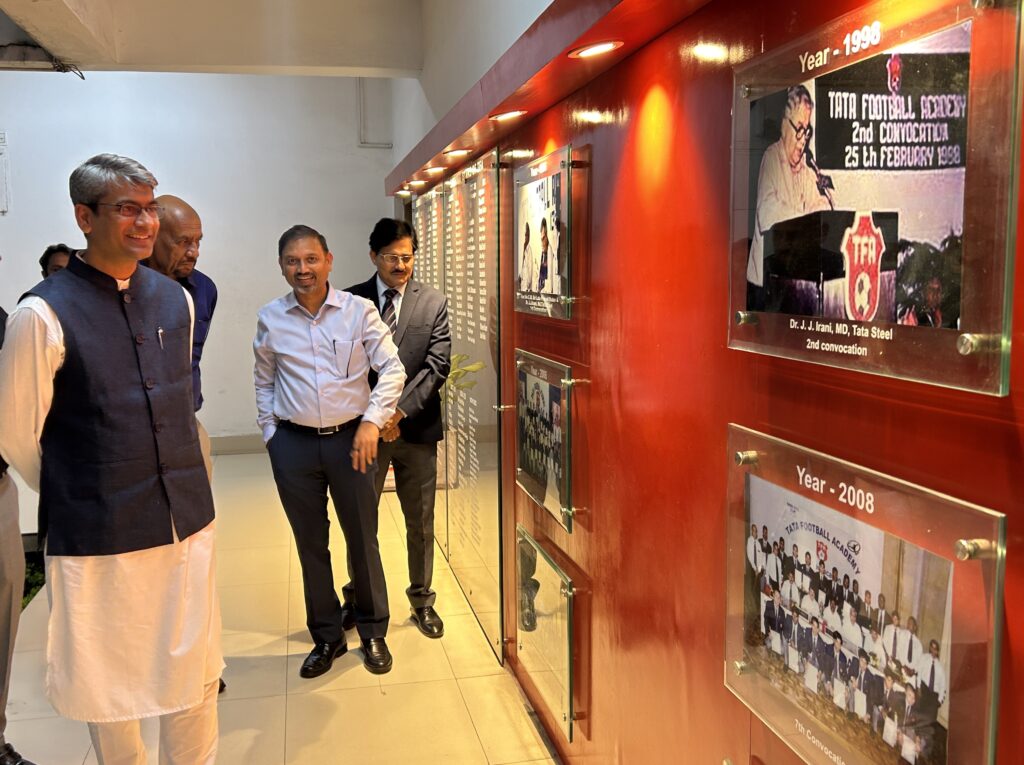
AIFF President Kalyan Chaubey, himself a former TFA cadet, in his recent visit to the U17 batch convocation as the Guest of Honour said adoringly, “I was part of the TFA’s first convocation in 1995 and I am lucky to be present in the 15th convocation. Back then, TFA was the only professionally run academy, providing us with European tours where we learned modern football techniques. TFA continues to produce gold and its value never diminishes.”

Currently there are more than 60 players such as Pronay Halder, Udanta Singh, Chinglensana Singh, Rithesh Sharma, Vinit Rai, Sourav Das of TFA present across clubs in ISL. TFA players such as Mahesh Gawli, Gourmangi Singh, Rennedy Singh and Noel Wilson have also now gone on to become top coaches with ISL Clubs as well as the Indian National team.

The trials are open to boys born between 1st January 2011 and 31st December 2012 (both dates inclusive). The selection process will be rigorous, with players evaluated on their performance in match situations, technical skills, tactical awareness, and physical abilities. Successful candidates will progress through to the final rounds of selection, where they will face further tests. 

Mukul Choudhari, CEO of Jamshedpur FC, said, “The trials represent a crucial opportunity for young footballers across the country to showcase their talent and begin their journey towards professional football. I am very to happy to state that we have over 9 players in the current Jamshedpur FC first team squad who have progressed from the youth system, with 7 of them being from the Tata football academy. With the academy’s world-class facilities and strong development program, we are confident that the next generation of players will continue our tradition of excellence. I encourage all aspiring footballers to give it their best and wish them success in the trials.”

TFA is amongst the highest-rated (3-star) AIFF accredited academy with all top facilities. The selected players will receive a full scholarship for four years. The players will have access to the exclusive training facilities, education, recreation rooms, accommodation and meals. The academy has top licensed coaches to provide training supplemented by best medical facilities for recovery and rehabilitation. The academy is also supported by psychologists, nutritionists, physiotherapists, masseurs, etc. from the High Performance Centre, Jamshedpur. The players will be representing the Jamshedpur FC Youth teams and will also have a chance to represent Jharkhand as well as the Indian National teams across various age categories. 

The last trial held in 2022, saw over 4000 candidates applying from all across India. For its continued contribution to the development of Indian football, the All India Football Federation had conferred TFA the “Continuous contributions to Indian Football” award while Tata Steel was awarded the “Valuable contribution to the Development of Football” award by Col. Rajyavardhan Singh Rathore – then Hon’ble Minister of Youth Affairs and Sports . 

“The trials at Tata Football Academy are not just about identifying talent, but about finding players who are committed to growing and excelling in the sport. We are looking for individuals who show both skill and a passion for learning. This is an incredible opportunity for young footballers to benefit from our comprehensive training program, and we are excited to discover the next generation of football stars,” said Kundan Chandra, the Head Youth and Grassroots.

All participants will be responsible for their own travel, accommodation, and meals during the trial period. Candidates must also upload original scanned copies of their birth certificate, Aadhaar card, passport (if available), and a passport-sized photograph.

Interested players are requested to visit the club’s website www.fcjamshedpur.com and click on the link to head to the registration page. For further details, please contact 0657-2221736 between 10 AM and 6 PM, Monday to Friday.

Online Registration Process

Prospective players are required to register online by filling out a detailed form, ensuring that all information provided is accurate. Candidates must also upload original scanned copies of their birth certificate, Aadhaar card, passport (if available), and a passport-sized photograph. Upon submission, applicants will receive a registration number through SMS and email, followed by a trial date and time after verification of their details.

Only birth certificates issued by government authorities will be accepted, and the date of registration on the certificate must be within one year of the player’s actual birth date. Additionally, selected candidates will undergo age verification and medical tests, as required.

Candidates must follow these steps carefully to ensure successful registration:

Step 1 – Visit www.fcjamshedpur.com and click on selection trial link

Step 2 – Read the instructions carefully  

Step 3 – Keep ready scanned original copies of your Birth Certificate, Aadhaar Card, Passport (if available), and a passport-size photograph.

Step 4 – Click Next and Fill in all mandatory fields accurately with correct information.

After submitting the registration form, a Registration Number will be sent via SMS and email. Please ensure your contact details are correct. You will receive a notification after your data has been verified, and the trial date and time will be communicated thereafter.

Important Notes: 

Only original birth certificates issued by valid government authorities will be accepted, and the registration date on the certificate must be within one year of the player’s actual birth date.

Candidates will undergo age verification and medical tests as required.

A letter from the school principal certifying the candidate’s age and current class is mandatory.

Participants must arrange their own travel, accommodation, and meals during the trials.

Canvassing in any form will lead to automatic disqualification.

Durand Cup 2024 Fixtures Out: Mohun Bagan to Face Downtown Heroes FC Kashmir in Opener

Defending champions Mohun Bagan Super Giant kick-off title defense against Downtown Heroes FC.

133rd edition of India’s oldest football tournament to be held across multiple cities.

New Delhi/Kolkata, July 12 2024: Defending champions Mohun Bagan Super Giant (MBSG), will face Downtown Heroes FC of Kashmir in the opening match of the 133rd IndianOil Durand Cup on 27th July, 2024, at the Vivekananda Yuba Bharati Krirangan (VYBK) in Kolkata. The match will kick-off at 6 PM IST. The group stage matches will end on August 18th with the famous Kolkata Derby between MBSG and city-rivals and fellow Indian Super League (ISL) side Emami East Bengal (EEB), being slotted at the VYBK, as the final fixture of Group A.

All 43 matches of the 133rd IndianOil Durand Cup will be broadcast LIVE on the Sony Sports Network as well as livestreamed on the SonyLiv OTT platform.

While matches of Group A, B and C will be held in Kolkata, the first match in Jamshedpur, a first time host where Group D matches will be played, will see hosts Jamshedpur FC take on Bangladesh Army Football Team, who are one of the two foreign teams competing in the tournament.

Group E games begin in Kokrajhar on July 30th with local side Bodoland FC taking on ISL side NorthEast United FC. Shillong, which will also be hosting the IndianOil Durand Cup for the very first time, will see the hosts Shillong Lajong FC take on Nepal’s Tribhuvan Army Football Team on August 2nd, 2024, in the first fixture of Group F.

The VYBK and Kishore Bharati Krirangan in Kolkata, JRD Tata Sports Complex in Jamshedpur, SAI Stadium in Kokrajhar and the Jawaharlal Nehru Stadium in Shillong, will be the tournament venues. A total of 24 teams have been divided into six groups with the six group toppers and two best second placed teams slated to qualify for the knockouts.

ABOUT IndianOil DURAND CUP

A symbol of India’s football history and culture, the Durand Cup is Asia’s oldest and the world’s third oldest football tournament. Organized by the Indian Army on behalf of the three Services, the Durand Cup has been the breeding ground for India’s best footballing talent, over the years.

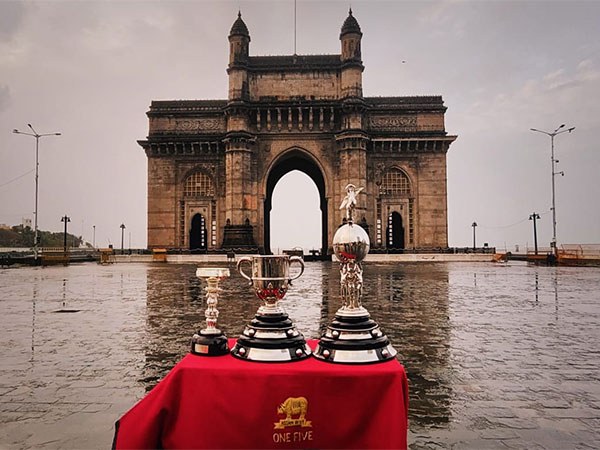
The inaugural edition happened in Shimla in 1888 and then the tournament moved to New Delhi in 1940, where it was held till 2016. In 2019, the tournament came under the aegis of the Eastern Command and moved to the eastern part of the country, with Kolkata, the Mecca of Indian football and the Eastern Command Headquarters, being the home base. What makes the Durand Cup even more unique is that the winners get three trophies, two rotating (Durand Cup and Shimla Trophy) and one for permanent keep (President’s Cup).

As we embark on this exciting journey over the coming weeks, let us celebrate the beautiful game of football, honour the traditions of the Durand Cup, and look forward to witnessing moments of brilliance that will be etched in our memories forever.

Durand Cup Group Stage Fixtures

Durand Cup, Fixture, 2024, Kolkata, Shillong, Jamshedpur, Kokrajhar

Rising to the Top: Kishore S Reddy on Sporting Club Bengaluru’s Remarkable Journey

We recently caught up with Kishore S Reddy, CEO of Sporting Club Bengaluru, to discuss the club’s impressive journey, his personal football experiences, and future aspirations. In this insightful interview, Reddy shares the club’s rapid ascent through the ranks, the importance of local talent, and how Sporting Club Bengaluru aims to make a lasting impact on Indian football.

Q: Can you give us a brief overview of Sporting Club Bengaluru’s journey so far?

Kishore S Reddy: Sporting Club Bengaluru has had an exciting journey, marked by significant achievements and growth. In the 2022-23 season, we debuted in the Bengaluru Super Division league and emerged champion, and qualified for the I-League 2. That’s when AIFF rejigged the pyramid and introduced I-League 3. We topped the group after edging Diamond Harbour and then went to finish inn the top 3 of I-league 3 and qualified for I-league 2. In I-league 2, we competed with very strong teams, won 11 out of 14 matches and emerged winners there by securing the qualification to I-league. All in a span of two odd years.

Q: Tell us about your early football experiences in Bengaluru.

Kishore S Reddy: For me, I’ve always been passionate about football, influenced by my family’s army background and my uncle, who played football in the intra-services. My sports journey started pretty early in my life as I started off in athletics and winning laurels in sprinting and other disciplines. I had started playing football too way before our family settled in Bengaluru. In Bengaluru, my sporting life took off at KV DRDO, CV Raman Nagar, where I participated in athletics and football and won medals for the school in various competitions. Just as many in my generation, I got Inspired by Maradona, and my love for football only grew through my school, college, and university years. In Bengaluru, we had smaller tournaments where even professional players and semi-professional players participated. I had a team called Anti-Virus, and we played in a lot of these tournaments and got introduced to many of the talents in Bengaluru. Unfortunately, I had to stop playing due to an ACL injury. During my playing time, I observed professional players from HAL and BEML, which fuelled my fascination with Indian football, especially in the early 2000s. I met players like Alex Praveen, who is also the assistant coach of SC Bengaluru now and Chethan Kumar, who was captain of Karnataka Santosh Trophy during my playing career in Bengaluru. In 2014, when Ozone FC came into existence, and I represented many of these talents and placed them in Ozone FC which went on win the Super Division Title in the debut season itself.

Q: How did you transition from playing to managing and promoting football?

Kishore S Reddy: My transition began in the final year of my engineering when I joined Kshatriya Sports in 2013 and worked there for a year. That is where I my met my future business partner Prithvi Ramakrishnan as well. During that period Bengaluru was witnessing an artificial turf boom as well. This got us thinking, and we got involved in the pay & play scene for a while. Most of the football plating nations have strong amateur league or Sunday leagues but in India we lacked that. We saw an opportunity there and started The Amateur League (TAL) in 2014, which went on to become a big hit that we expanded even to Delhi in 2016.

Q: How did Sporting Club Bengaluru come into existence?

Kishore S Reddy: Post-pandemic, we brainstormed about the direction that TAL needs to take. I had some thoughts regarding establishing a professional team in Bengaluru and I divested my stake in Sports Paddock, the parent company of TAL and set out to realize my ambitions.  I did a lot of research at that point and realized that in the next decade or so, ISL clubs are likely to break even, and there’s potential for promotion to the ISL from I-league. I started scouting for investors to set up a professional club, and in early 2022, we collaborated with Sporting Group International from the UK. Their CEO, Mr. Adrian Wright, who was also a former board director at West Bromwich Albion, along with his partners Kulbir Sohi and Tony Sohi, invested in the club in a personal capacity and established Sporting Club, Bengaluru.

How important is the “local connect” factor for Sporting Bengaluru?

Kishore S Reddy: It is very important for Sporting Bengaluru. We are always on the lookout for local talent and promoting them. So far, we have given a lot of opportunities to local talent and will continue to do so in the future. I have a very interesting anecdote to share in this regard. In our 2022-23 debut BDFA Super Division League season, we took on Kickstart FC, yet another side from Bengaluru that promotes local talent. That match drew around 3,000 spectators to the Bengaluru Football Stadium, which is a testament to the fact that we are always trying to promote local talent. Additionally, the good work we’ve done with TAL, including the first Baby League at FSV, has built a strong foundation and goodwill for us.

Q: What’s your approach to recruitment and team building at Sporting Club Bengaluru?

Kishore S Reddy: Our recruitment is heavily data and technology-driven. I’ve drawn inspiration from other figures in the Indian football ecosystem, like Gokulam Kerala FC’s president VC Praveen, and observed the methods of those who have successfully built teams. Internationally, we want to emulate clubs like Brighton and Brentford, who recruit young talents, develop them, and then sell them to make profits. We have already managed to do that with some young talent. We focus on having a strong foundation and continually redefining our strategies. For the I-League, we are looking for young, promising foreign signings who add value without compromising our principles. We have a mix of Karnataka players and talent from across the country.

Q: What are your thoughts regarding the BDFA Super Division League?

Kishore S Reddy: The BDFA Super Division has significantly improved under Mr. N.A Harris and M. Satyanarayan’s leadership, and this is what has translated into Karnataka’s success in the Santosh Trophy.
Now, Karnataka has one of the best youth leagues – YPL that is being conducted for various age groups, and for the seniors the Super Division, A, B and C division league with many clubs vying for the title. The ecosystem in Bengaluru is really thriving. Now, talents across the country are ready to come and play in Bengaluru because playing in the Bengaluru league opens many opportunities for them.

Q: What are your future plans for Sporting Club Bengaluru?

Kishore S Reddy: Our plan is to push for the I-League title, and we are planning to play the matches at the Bengaluru Football Stadium, hoping to draw a good amount of support for our team. We have managed to achieve so much in this short span of time, and there is only one trajectory for us: upward. The support from the local community and our focus on leveraging data and technology will play crucial roles in our success. Our ultimate goal is to make a significant impact on Indian football and provide a platform for young talents from Karnataka to shine.

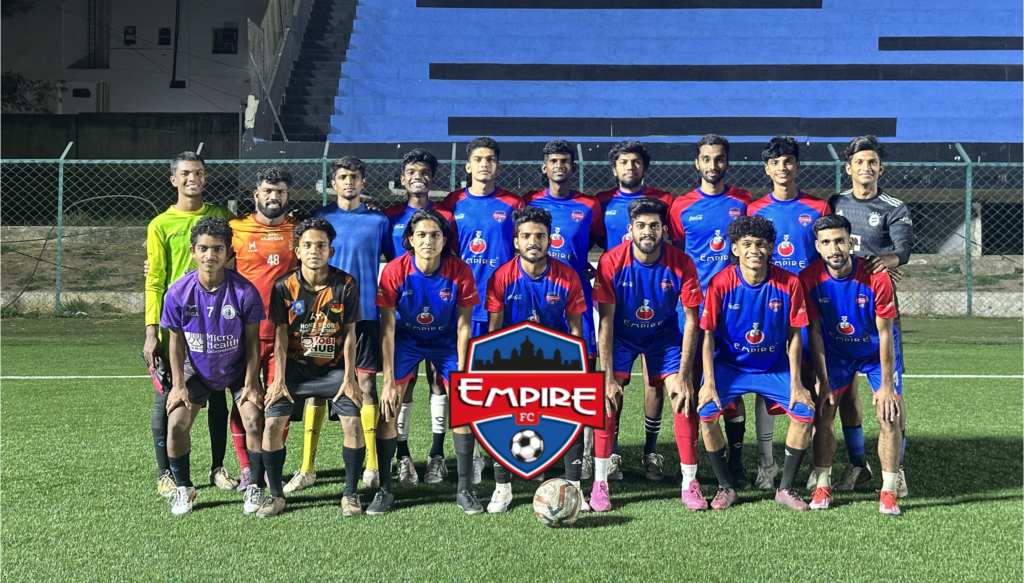
Empire FC to debut in the Karnataka State Football Association “C” Division League

Empire FC, backed by Bengaluru’s popular food chain, Empire Restaurant and Hotels, is set to make its debut in the Bengaluru District Football Association’s “C” Division league. The competition, commencing in May, will witness the much-anticipated entry of a club supported by the NKP Empire Ventures Pvt. Ltd. (Empire) group, known for serving Bengaluru’s delicacies since 1966.

The NKP Empire Ventures Pvt. Ltd. group’s venture into football aligns with its core values of passion and community contribution. The club aims to compete for titles in Karnataka’s football ecosystem and provide a platform for aspiring footballers to showcase their skills. Empire FC aspires to contribute to the growing football culture in Karnataka under the guidance of the Karnataka Football Association.

Club President NKP Abdul Azeez, expresses excitement and anticipation about Empire FC’s future, emphasizing the club’s commitment to football driven by passion and social responsibility. He says, “It was a natural progression for us to get involved in football. The first and foremost is the passion we all have towards football. The second is our urge to give back to the society. Among the plethora of activities we do on that front, we also wanted to help our society through sports.”

Club Secretary Masoud Mohamed emphasized, “The second-generation successors of the NKP Empire Ventures Pvt. Ltd. Group, KPC Mohamed Kunhi, Late NKP Abdul Haq, and NKP Abdul Azeez, harbours deep-rooted passion for football and have played the game for their colleges and state. The love for football runs in our family. Hence, it was a logical decision to support the sport. We are confident that our efforts will contribute to enhancing the footballing ecosystem in Bengaluru and India.”

The team has attracted top talent nationwide and is providing them with excellent training facilities to prepare for upcoming matches. With regular practice sessions over the past month and a half, expert professionals oversee the team’s tactics and fitness to ensure peak performance. The club’s journey begins in the KSFA “C” Division campaign with matches starting in early May, aiming to secure the division title and earn promotion to the “B Division.”

Empire FC heralds a new chapter in Bengaluru’s football scene, entering with a strong desire to compete, uplift, and enrich Karnataka’s burgeoning football landscape.

About Empire FC: Empire FC, a football club supported by NKP Empire Ventures Pvt. Ltd., is set to make its debut in the 2023-24 season of the Karnataka State Football Association “C” Division League. This Bengaluru-based newcomer is poised to become a prominent fixture in the vibrant Bengaluru football scene.

About NKP Empire Ventures Pvt. Ltd.:  NKP Empire Ventures Pvt. Ltd., the parent company of Empire Restaurant and Hotels chain, has a rich legacy rooted in Bangalore’s culinary heritage. Established in 1966 by Mr. Abdul Rahim Haji from Malaysia, Empire Restaurant has evolved from a humble alley in Shivajinagar to a renowned restaurant chain over the last five decades. Focused on authentic recipes, innovative culinary practices, and personalized service, Empire continues to offer a gastronomic journey cherished by patrons of all ages.

AFC Proposes New Dates for the Postponed World Cup Qualifiers

AFC, India, Football, Qatar, Afghanistan

Asian Football Confederation has proposed new dates for the FIFA World Cup Qatar 2022 and AFC Asian Cup China 2023 Asian Qualifiers that were supposed to take place in March and June 2020.

AFC was forced to postpone the qualifiers due to the outbreak of the COVID-19 pandemic across the world. Now that the world is limping back to normalcy, AFC has released the new dates for the qualifiers. 

Matchdays 7 and 8 that were postponed will now take place on October 8 and 13 and Matchdays 9 and 10 will take place on November 12 and 17, 2020. 

According to the latest schedule released by the AFC, the following are the match dates for India. 

  • 08 – October 2020 – India vs Qatar 
  • 12 – November 2020 – Bangladesh vs India
  • 17 – November 2020 – India vs Afghanistan

India’s last world cup qualifier was played on 19 November 2019 against Oman in a away tie which they lost by 1-0. The home tie against Qatar which was supposed to take place on 26 – March -2020 was scheduled at the Kalinga stadium in Bhubaneswar. Now, with the rescheduled dates, we will have to wait for the All India Football Federation to announce the new venue. 

The Asian Football Confederation press note regarding the proposed new dates have also mentioned that the AFC will continue to monitor COVID-19 situation in its respective member countries and will notify the member associations if there is a need to reassess the match schedules due to the ever-present COVID-19 threat. They have also mentioned that they have come out and announced these dates with a view to complete the Preliminary Joint Qualification Round 2 by November 2020. 

With COVID-19 posing a considerable threat in India even today, it will have to be seen how the plans of AFC to conduct the World Cup/ Asian Cup qualifiers will pan out. We will keep you updated on the latest developments in the coming days/months.

Player Profile – Kyrgyz Republic National Football Team

Air Force Club vs. JSW Bengaluru FCHere is a no-frills Player Profile of the Kyrgyz Republic National Football Team by Raghav Sastry. Follow him on twitter – The Indian 420

(GK) Pavel Matiash (30) : Height – 197cm, Weight – 94kg

Has 25 National Team caps with an average of 84min / game

Leagues Played – Uzbekistani 1st Div.; Malaysian 2nd Div.; Maldives 1st Div

(DF) Azamat Baimatov (28) ( captain ) : Height 188 cm, Weight – 79kg

Has 30 NT caps with 4 goals against Macau, Australia, Kazakhstan and Iran u-23

Leagues Played – Latvian 1st Div.; Bahraini 1st Div.; Indonesian 1st Div.; Russian 2nd Div.

(DF) Kursanbek Sheratov (28) : Height – 170cm, Weight – 65kg

17 NT caps with an average of 82 min/ game

Leagues Played – Kyrgyz 1st Div.

(DF) Tamirlan Kozubaev (23)

Leagues Played – Lithuanian 1st Div.; Serbian 1st Div. where he played for a club which got relegated to 2nd division in the season he played him

(DF) Aziz Sydykov (25) : Height – 170cm, Weight – 75kg

19 NT caps with an average of 64 min/ game

Leagues Played – Kyrgyz 1st Div.

(MF) Edgar Bernhardt (31) : Height – 174cm, weight – 65kg

He has a German, Russian and a Kyrgyz Citizenship (did not know 3 were possible)

14 NT caps with an average of 82 min / game and a goal against Bangladesh

Leagues Played – German 1st Div.; Netherlands 2nd Div.; Finnish 1st Div.; Polish 1st Div.; Oman 1st Div.

(MF) Furkhat Muzabekov (24): 9 caps in the u-21 team, 3 caps in the u-23 team and 13 caps for the Senior team.

Played in the Moldovan 1st Div.; Crimean 1st Division (Crimea was annexed by Russia and clubs in that region started playing in the Russian 3rd Division. Ukraine protested as they claim that Crimea is part of their territory. So, the UEFA created a new league and clubs from Crimea are to play in the league. Most clubs from that region are Ukrainian with a small of fraction of them holding “Crimean FIFA nationality)

(MF) Akhmedov Murolimzhon (26) : Two u-23 appearances against Jordan and Iran

He was voted as the best player in the 2017 season of the Kyrgyzstan 1st Div.

(MF) Pavel Sidorenko (30) : Height – 175cm, Weight 70kg

20 NT caps with an average of 62 min / game. He also scored a goal as part of the u-23 outfit against China u-23

Leagues played – Kyrgyz 1st division

(MF) Anton Zemlianukhin (29) : Height – 175cm | Leagues played – Turkish 2nd Division, Serbian 1st Divion, Thai 1st Scored 2 goals against Macau and 1 against Myanmar in the 2019 ACQ

(FWD) Bakhtiyar Duyshobekov (22) : 13 NT caps with 1 international goal against Tajikistan and 6 u-21 appearances with 1 goal

Leagues Played – Belarusian 1st Division, Turkish 4th division

(FWD) Viktor Maier (27) : Played for the u-17 Germany team with 10 appearances and 13 Kyrgyz NT caps with an average of 84 min / game

Leagues Played – German 3rd division, Dutch 2nd Division

(FWD) Vitalij Lux (29) : Height – 183cm, Weight – 82kg | 14 NT caps with an average of 75 min / game with a goal against Macau.

Leagues Pleayed – Lower regional German divisions and German 3rd Division

(FWD) Mirlan Murzaev (27) : He has a goal against Sri Lanka, Macau, India and Kazakhstan, 28 NT caps with an average of 60 min/ game

(DF) Valleri Kichin (25) : Kyrgyz player of Russian descent

He has played in the Russian 1st Division and Kyrgyz 1st division and currently plays for a club in the Russian 2nd division

(MF) Akhlidin Israilov (23) : Height – 180cm, Weeight – 65kg

He has played in the I- League with NEROCA FC and has played in the Indonesian 1st Division and Ukrainian 1st Division.

He has ten u-21 appearances with 1 gaol and 12 senior team caps with 2 goals

I-League champions, Aizawl FC, appoints Portuguese Paulo Menezes as Head Coach

Aizawl FC, Indianfootball, Football, Mizoram, Aizawl, India, Soccer, Portugal, Spain, Coach, Manger, Paulo Menezes, i-league

Portuguese coach Paulo Menezes ​appointed as the manager of I-League champions, Aizawl FC for the 201​7/18​ season.

​Paulo was part of the coaching setup which masterminded the triumphs of the invincible Spanish National Team in the Confederations Cup, FIFA World Cup and European Championship during its golden era (2013 to 2016).

“When my representatives,  Trebol Sports Internat​ional ​informed me about this opportunity, I did not even think twice about it. ​​I have learnt about Indian football since 4 years ago and I have spoken to many people about it and how much it has grown over the years.  I want to be part of this and Aizawl FC is right at the heartbeat of this crescendo of development”.

The 39-year-old Portuguese acknowledged that Indian clubs have improved a lot during the past few years but in order to reach the pinnacle, they need to to adopt the organizational structure of a European club.

“Clubs must be receptive to the idea of developing many departments- scouting, marketing and the most important thing, a youth academy.

​I believe that in order to be the best club in the country or this region, it is a must to build a strong academy. From the junior to the senior teams, they must adopt the same game model and tactical system so that there is consistency of play throughout all levels. The assimilation of youth players to a senior level will then become a seamless process”.

As a former Vicente del Bosque’s coaching staff, it is no surprise that Paulo adopts the same football philosophy as the fearsome La Roja.

“​I will like my players to play the offensive game with a high level of ball possession so that they can create many scoring chances.  Depending on the game situation, we will vary the tempo of our attack but the main focus is on ball rentention”.

Besides plans to impose his Model of Game on the team and improve the club footballing structure, the former World Cup winner is also interested in developing the capabilities of the local players.

“I will like to help the players improve their skills- be it technically or tactically, so they can become more competitive and maintain a strong mentality before and during the game.  ​I believe I can contribute to Indian football by getting as many of the  local players into the National Team as possible.  I derive an immense sense of pride whenever I see my players put on their national colours.”

Pending his visa approval, Paulo is expected to arrive in Aizawl early next week to assume his new role.

1 2 3 33